

Why don't the numbers match? Yesterday everything worked fine.
Excel is broken. Once again. Jumping cells, mismatched values, two people editing at once and overwriting each other's work—typical issues everyone has faced at least once in their career. Even Zure’s internal Magic: The Gathering tournaments haven't been spared.
But we’ve decided to stick with Excel because there hasn’t been a better alternative. Rebuilding a proper app for our internal card game league felt like overkill—right up until Fabric Apps entered the picture.
At first glance, it might look like just one more item inside Microsoft Fabric. But take a deeper look and you'll see it adds a whole new level on top of what’s already there. Until now, Fabric has offered capabilities for analytics, data and intelligence platforms—Fabric Apps adds an application platform on top. With Fabric Apps, you can build data-driven applications directly on Fabric.
Solving our card game issue
Everything starts with a need. Ours was a single Excel file where we tracked match points. Several players edited the same sheet, and more than once the cells got overwritten, or the wrong row got marked. Everyone used their nicknames on the game sheet, too. That created a hassle for the new players. For example, when I joined for my first game, I had no idea who to contact about the matches I still needed to play.
That gave us three clear requirements: a need to log match results, keep track of which matches had been played, and let players message each other. That was our starting point for building with Fabric Apps.
The first thing to know about Fabric Apps is that you get two options: an analytical app (a data app) or an operational app. The easiest way to understand the difference is to think of the analytical app as a close relative of Power BI—you connect to a semantic model and build an application for data visualization. The difference is how you create visualizations. Power BI keeps you inside its own capabilities and functionalities; Fabric Apps lets you go far, far further because you can take advantage of custom visuals.
We were interested in the operational app. As the name suggests, it adds custom apps to Fabric. The beauty of this is that when you start building the app, you don’t need to think about setting up authentication, hosting or database setups—Fabric Apps takes care of all of those. You can just focus on the needs and build fully functional web applications to cover those.
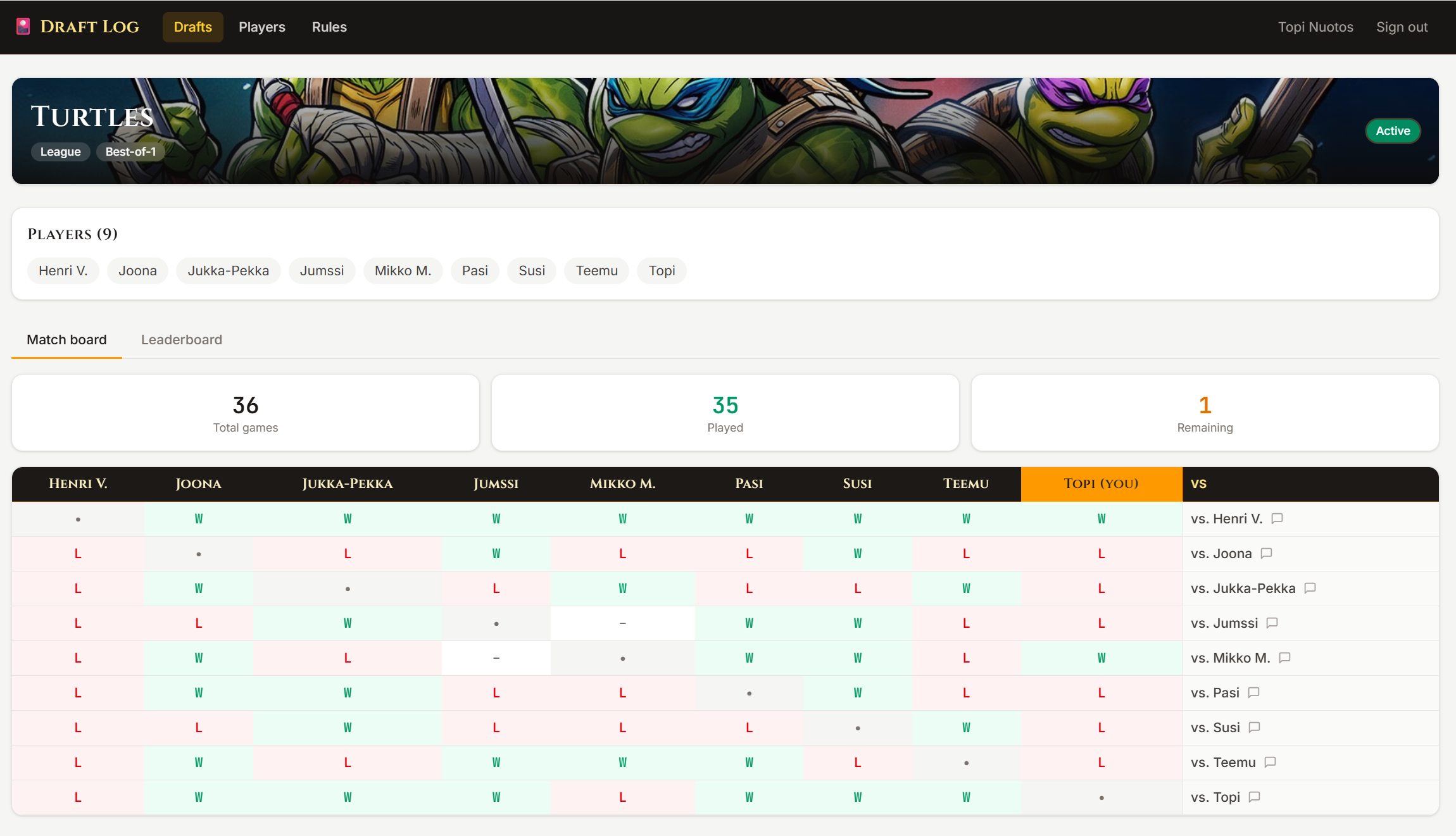
Making the app pretty
Even though I'm a data architect now, I also have experience building reporting solutions. That means that for me, a working app is not enough. It also must be pretty and functional. For that, I took advantage of a tool called Fabricator. It’s an all-in-one workbench for building Fabric Apps. It can suggest the right skills for the application you’re building and how you can optimize it. It even allows you to pinpoint the exact cells that you want to edit and tell Copilot what needs to be done.
Why should you care about Fabric Apps?
For now, this post might seem a bit small-scale when we have just discussed how we have solved our internal card game league point tracker. But what fixed the point tracking works the same way for anything operational. Instead of spinning up yet another Excel file for budget planning, you can build a proper app for exactly that use case—with real data types, real validation, and no risk of someone overwriting a formula. The best part: all data will be available right away in Microsoft Fabric for other use cases.
But when should you think about testing Fabric Apps? First, if you’re doing any type of rapid prototyping. Fabric Apps allows you to go from idea to a live application in minutes with preconfigured infrastructure. Second, it allows for an alternative for internal tools and dashboards. Instead of building Power BI reports and working with their limitations, Fabric Apps adds custom frontends that allow you to build visualizations that aren't possible with Power BI. Third, you can build enterprise level applications inside Fabric where the data already exists.
For now, Fabric Apps is still in preview and not available in all regions. But when it is generally available, Fabric Apps can transform your operations in the same way as it has changed our internal card game league point scoring system.