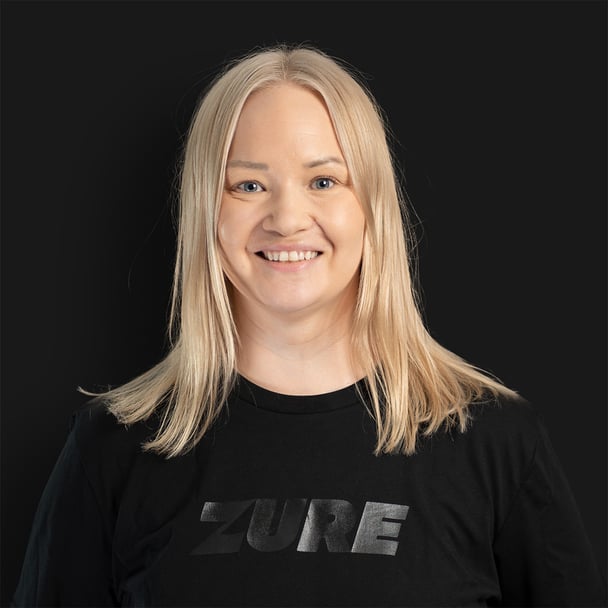
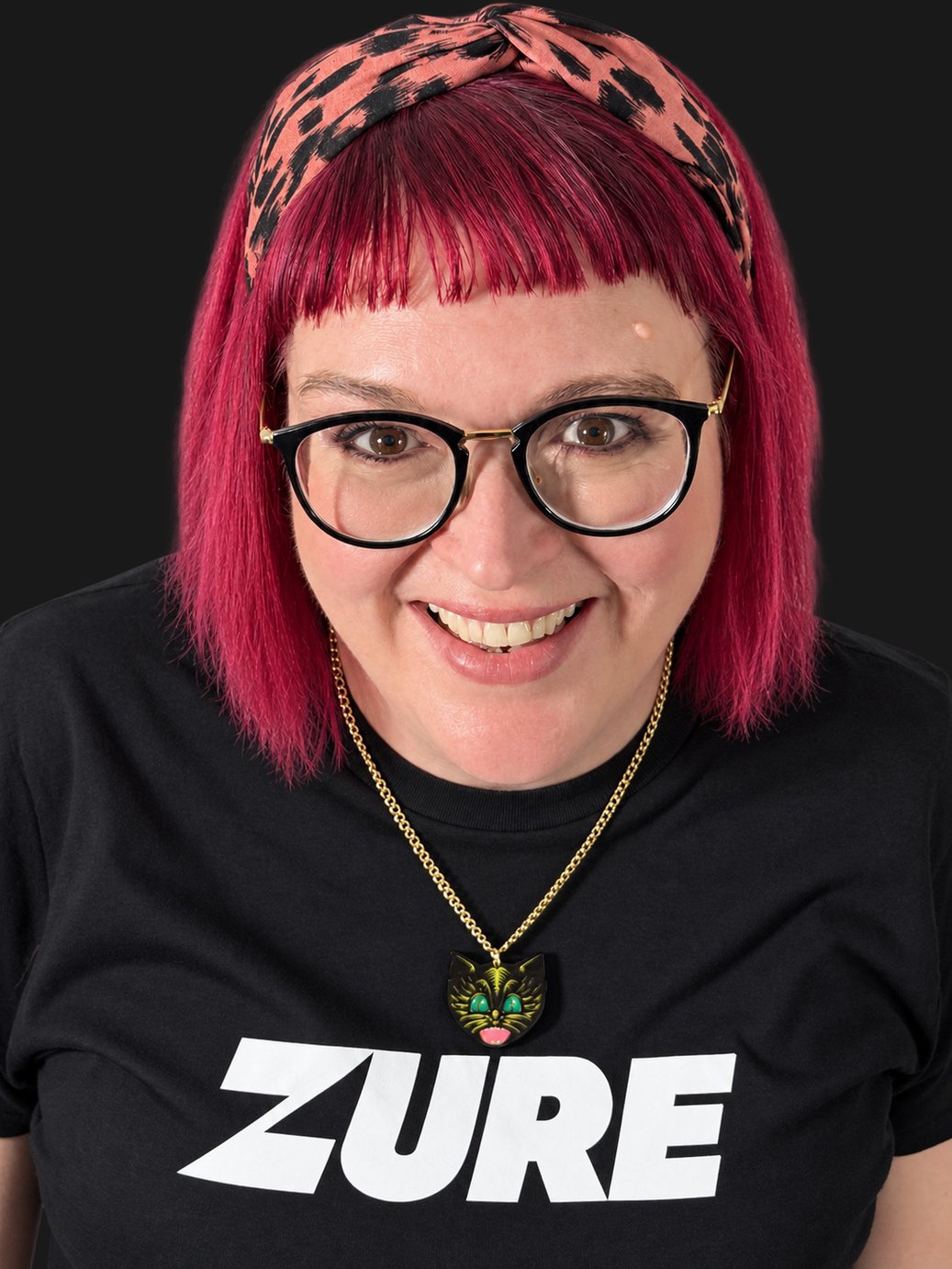
Some people build data platforms. Some people build Lego sets. Debbie Edwards does both, and says the two have more in common than you'd think. After nine years at her previous company, Debbie joined Zure as a Microsoft Fabric Engineer. She brings deep experience across the Microsoft data stack and a list of certifications to match.
In this edition of Zurean Stories, we talk about the craft behind a good semantic model, the presentation that sealed the deal, and why the Edinburgh Fringe is a fixed date in her calendar.
Hello Debbie, and welcome to Zure! What is your job title and main area of expertise?
I'm a Microsoft Fabric Engineer, specialising in Microsoft technologies across the full data stack. Microsoft Fabric, Power BI, and Azure (Data Factory, SQL, Synapse, Data Lakes, Databases, and Logic Apps). I'm certified in Fabric Engineering, Fabric Analytics Engineering, Power BI, Azure Data Engineering, and Databricks.
My work focuses on building end-to-end data platforms. From raw ingestion right through to business-ready insight. That means designing pipelines, warehouses, and star schemas, and taking data through the full bronze, silver, gold journey. I also create and deliver training courses and presentations covering Fabric, Azure, data engineering, data modelling, SQL, and Power BI. I have run workshops for Sheffield University on Power BI for the last three years.
What's a key skill or strength that you bring to your role?
I absolutely love SQL and PySpark, and I'm comfortable working across both batch and real-time processing. Where I think I add the most value is in delivering complete solutions rather than just one piece of the puzzle. I've built full end-to-end projects, working closely with DevOps and security teams, for organisations including HMLR (Land Registry), Transport for Wales, Devon County Council, Lancaster County Council etc. That's included everything from pipeline design to warehouse builds to star schema architecture and Power BI report creation.
I also put a lot of focus on building reusable frameworks, so the code and processes I create don't just solve today's problem. They hold up as the platform grows.
"My heart is with Microsoft Fabric, and this is the company setting the gold standard for Fabric work."
What motivates or inspires you in your professional life?
I'm genuinely passionate about working in data-driven environments where I can integrate diverse data using Fabric's unified analytics platform. There's something satisfying about seeing disconnected sources come together into something coherent and useful.
I particularly love working with semantic models. There's a real craft to shaping data so it's not just accurate, but genuinely easy for people to use and trust. More broadly, I enjoy leveraging the full ecosystem: from data integration and engineering through to real-time analytics and business intelligence. Being able to work across that whole spectrum, rather than being boxed into one layer, is what keeps the work interesting.
"Leaving a company after nine years is a big move. It has to be right. And this felt right."
What was your first impression of Zure?
It was the people. Clearly this was a company really championing Microsoft Fabric, and genuinely engaged with it. Across the board there are MVPs and content creators, and incredibly smart leaders and data engineers. You can tell very quickly that this is a company you want to be part of if you want to be a Microsoft Fabric professional.
What made you want to join Zure? Was there something in particular that convinced you?
I worked at my last company for nine years and had an amazing time. I worked with great people on Azure, Fabric, and Databricks. But my heart is with Microsoft Fabric, and this is the company setting the gold standard for Fabric work. On top of that, everyone seemed so nice and helpful, and it looked like a genuinely good place to work.
What was your "this company gets me" moment during the hiring process?
I was asked to create a slide deck presenting Fabric the way I would to new data engineers. There's nothing I love more than pulling together all my thoughts about past projects and finding new insights in them whilst chatting to other people. It was after that presentation, and the conversation we had afterwards about my working style, that I realised this was something I could say yes to. Leaving a company after nine years is a big move. It has to be right. And this felt right.
What are you most looking forward to working on at Zure?
First of all, getting back to client projects. Thinking about the frameworks to set up best practice automated pipelines, working on transformations, and building out bronze, silver, and gold medallion architecture and content. I'm also looking forward to becoming a real part of the team and helping shape ideas. I've only been here a few days, but I can't wait to look back on this first part of the journey and see how far I've come.
What do you enjoy doing outside of work that reflects your personality?
Outside of work, I'm a big Lego fan. There's something about building a set that scratches the same itch as building a good data pipeline: following the instructions, sure, but also knowing exactly how all the pieces fit together.
I'm also a keen board gamer, and we try to get a board gaming night or weekend in whenever we can. Comedy and theatre are a big part of my life too. I try to make it to the Edinburgh Fringe Festival every year. And a couple of things I'm looking forward to getting back into properly: playing my saxophone, and painting.
Welcome to Zure, Debbie! We can't wait to see what you build, whether it's a medallion architecture or the next Lego set.
Interested in joining Zure too? See our open positions.