Here's something nobody tells you when you start a company: the thing you were most worried about probably won't be the hard part. And the thing you didn't think much about? That'll keep you up at night.
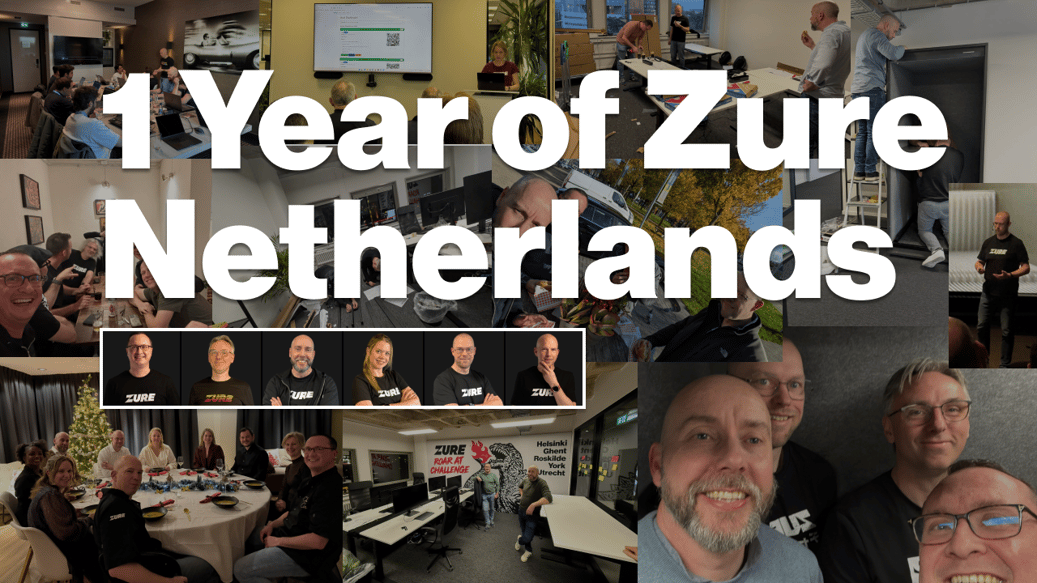
1 Year ago, Chris and I signed the papers and Zure Netherlands became real on May 1st 2025. Starting my own company had always been a dream somewhere, someday. So when Sakari, CEO of Zure Group, pulled me aside at IglooConf in the summer of 2024 and simply asked "Geert, would you consider launching Zure Netherlands?" I didn't need much time to think. This was it!
What I didn't fully expect was just how fast, chaotic, and exciting this first year would be.
How It Actually Started
I was alone at IglooConf when Sakari asked the question (well not alone, Sakari asked me at a full table during the speaker dinner there). But Chris wasn't there. Sakari did say he wanted a strong duo to run the company. Chris was my obvious choice. We've worked side by side for over nine years. People mixed us up at our previous employer, not because we look alike (we really don't), but because we finish each other's sentences and share the same obsessions about technology and doing right by clients.
We already knew the Zure story. We’d heard it first-hand from the founders in Finland, Belgium, Denmark, and the UK. How they built their offices, their cultures, the early mistakes. Zure isn't a typical consulting firm. Ownership is shared. Transparency is not a value written on a wall, it's how things actually work. Tough news is delivered straight. Mistakes are talked about openly. That matched exactly how I wanted to work in the first place.
So we said yes. Buying into the Zure culture & brand but making our own flavor of it in the Netherlands. Same but different. Challenging existing concepts immediately to make things better and took the great ideas that other countries had implemented with success.
The journey started.
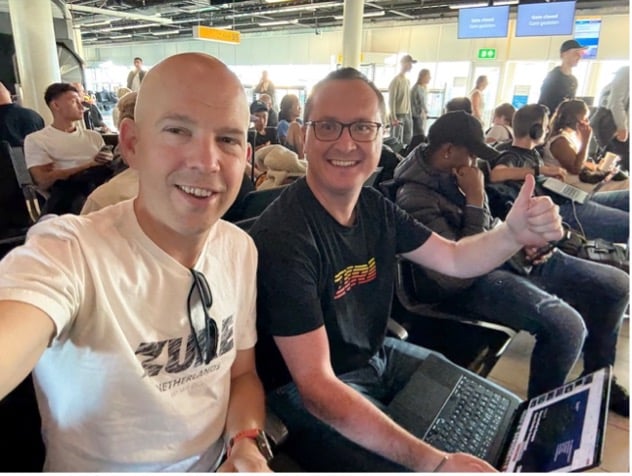
Chris and I boarding a plane to Zure Finland to meet the other Zure founders.
Day one
My first intake meeting was at 9:00 AM on the first official day of Zure NL. Sounds like a great start. It wasn't really.
The project I'd lined up before we launched got cancelled just before we opened the doors. So there I was, brand new company, no revenue, doing an intake for something that would take two weeks to get started. Luckily Chris did have an assignment already but this wasn’t the start I hoped for.
Two weeks. In the grand scheme of things, that's nothing. But when it's the first two weeks of your company, it feels very different. That was the closest thing we had to a real scare in year one.
What followed was basically the opposite problem.
The hard part wasn't what we expected
We thought finding clients would be the big struggle. Finding new clients when you're unknown in a market, that is genuinely hard. But those first relationships came from trust we'd built over years in consultancy with previous clients and the community. And the projects that landed were not the "take what you can get" type we'd prepared for to just get some money in.
Within months we had three projects running that hit exactly the areas we care about most: platform engineering on Azure & cloud governance, building an AI developer platform at serious scale at another customer, and for a 3rd company we were designing and shipping custom built AI agents on Azure. We had a project bigger than we could handle ourselves and got help from colleagues from Finland and Belgium and jumped in to help the UK team with some of their work later in the year as well. That cross-border collaboration really showed the power of the greater Zure. It made the Dutch team feel much bigger than six people.
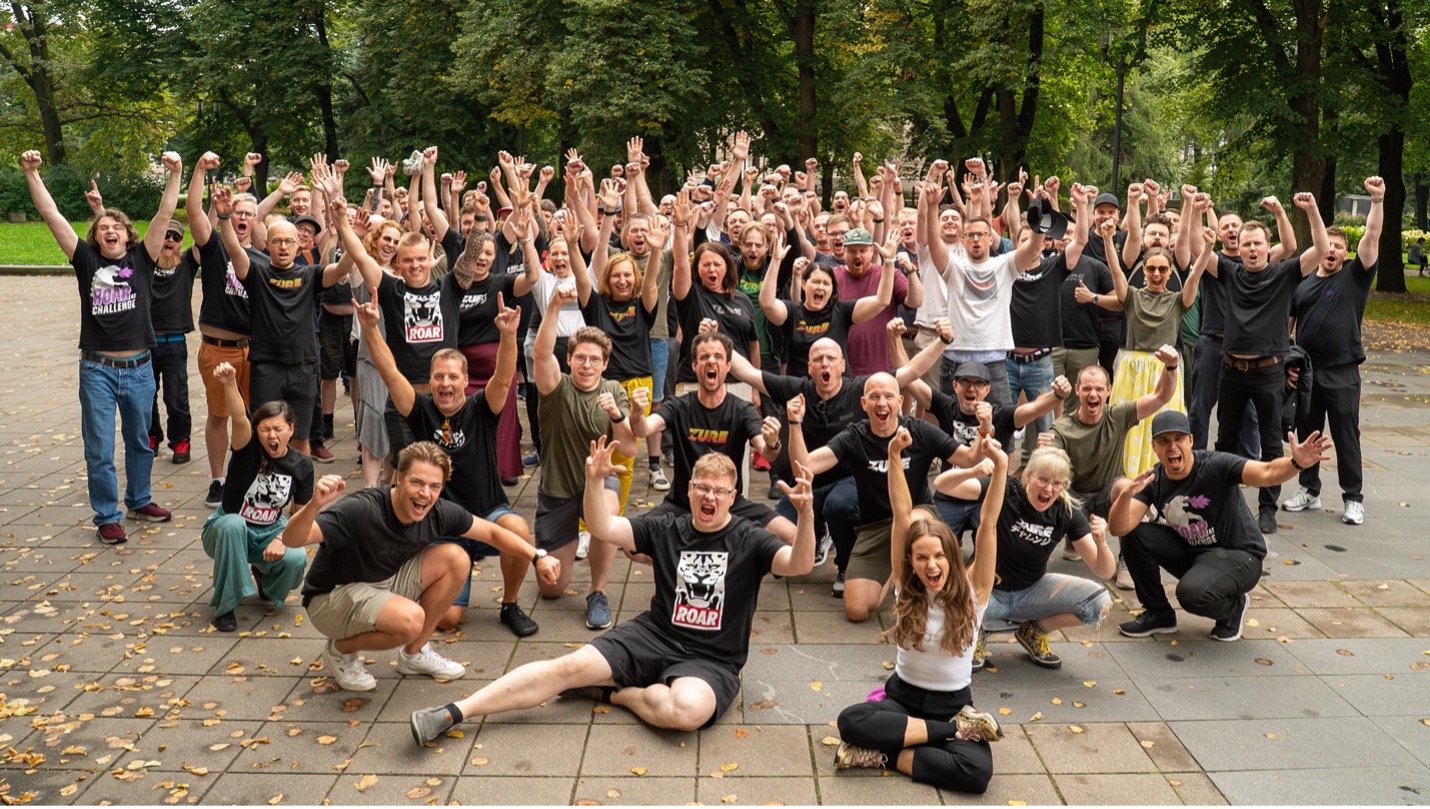
The relationship of the bigger Zure community was built further during the interactions we had with the other countries. Weekly leadership calls but also some nice trips to meet face to face with leadership in the other countries and as cherry on top the yearly “Zafari” where all employees were taken on a trip to Riga to build a better relationship between countries, get to know your peers in other countries better and lastly having fun together.
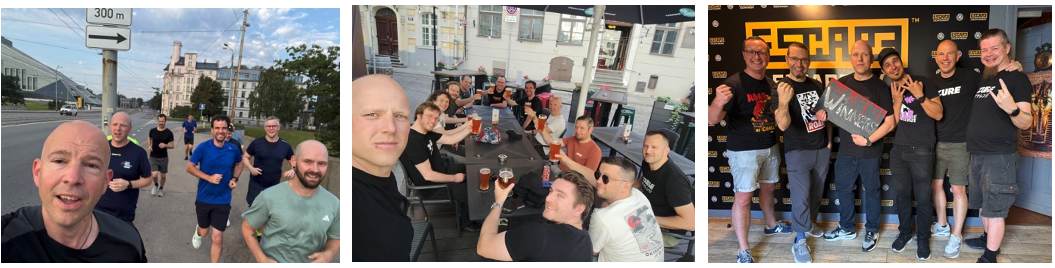
Social run in Riga during Zafari in the early morning.
Finding the right project at the right time for the right people. That is hard, I already knew that from the 20 years of consulting work I’d done. A wise lesson I learned from the owner of my previous employer is that you always need 3 leads for every person needing a project. 1 will get delayed, 1 will be cancelled (like the one just before we started) and 1 will be the winner. You keep searching for assignments right up until the contract is signed, not a moment before. I knew this rule but in the chaos of launching I was happy enough to find our first assignment that I stopped searching... And of course this project got cancelled. Later during the year things changed and at one point we had more work than we could actually execute. That's a good problem, but it's still a problem.
We managed. No bench time across the whole year, except those first two weeks. I’m very very happy we were able to pull this off. It gave us the breathing room to build and grow the company on our own terms and pace.
The team
A company is just the people. So let me tell you about ours.
Jan and Patrick were the first hires, both in November. We took them out for dinner separately, no pitch deck, no formal process, just a simple conversation about where we were heading and what we were building. Both of them knew us from the past. We’ve worked with them and knew them from the community. Both said yes. Having them on board gave the company actual weight. Before that, it was just Chris and me with a lot of ambition and some IKEA furniture.
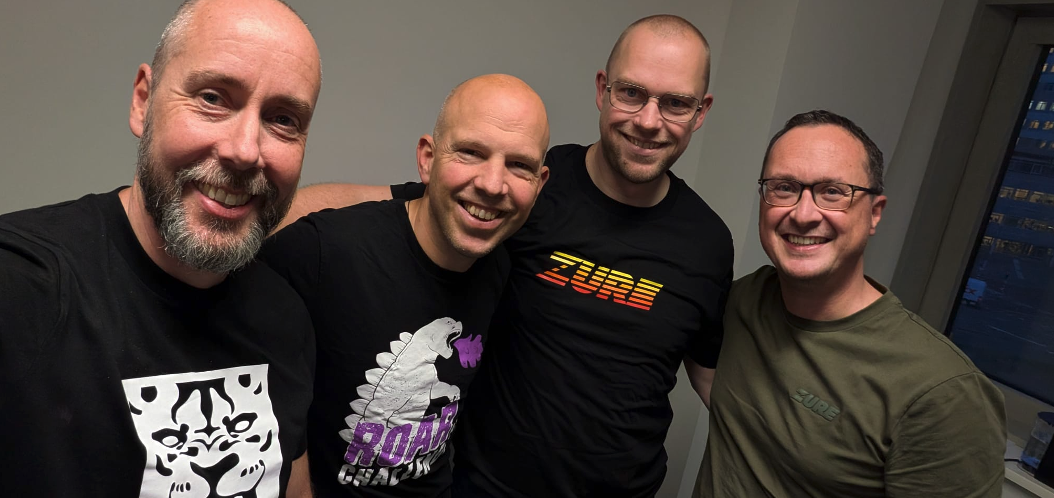
First day of Jan & Patrick.
Then Barbara reached out. She already knew Sakari from Finland and Rik from our UK office. She'd been watching what we were doing. Her reason for wanting to join was simple: she wanted to work with people who "walk the talk". She was looking for a team that gave her the ability to grow together making each other better. Working with clients on tough Azure problems. She started January 1st.
Marnix joined in March, a former colleague of Jan. After initial conversation we immediately knew. This is someone you can trust and build upon. We didn't have a formal onboarding programme. We didn't have a finished office either. The evening he came in to talk to us, we were mid-move into a bigger space. He ended up helping us assemble desks and chairs. He fitted right in.
I’m very proud we were able to build this awesome team of people who know their stuff and are actively helping grow the company together and making each other better every day. Building a personal relationship with the team is important.
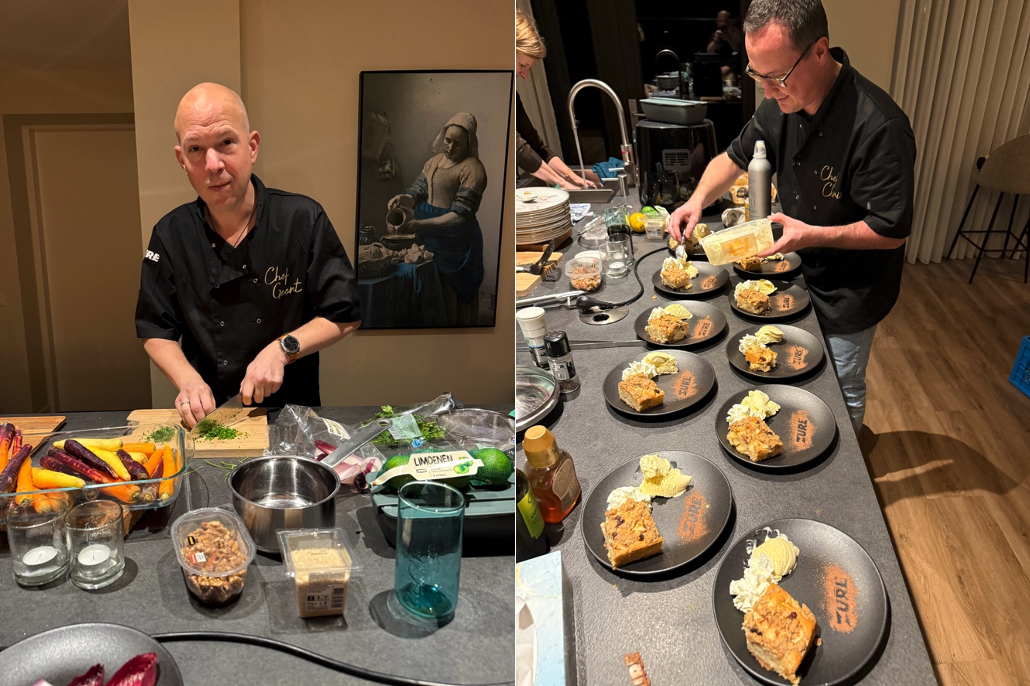
Cooking Christmas dinner for the whole crew together with Chris.
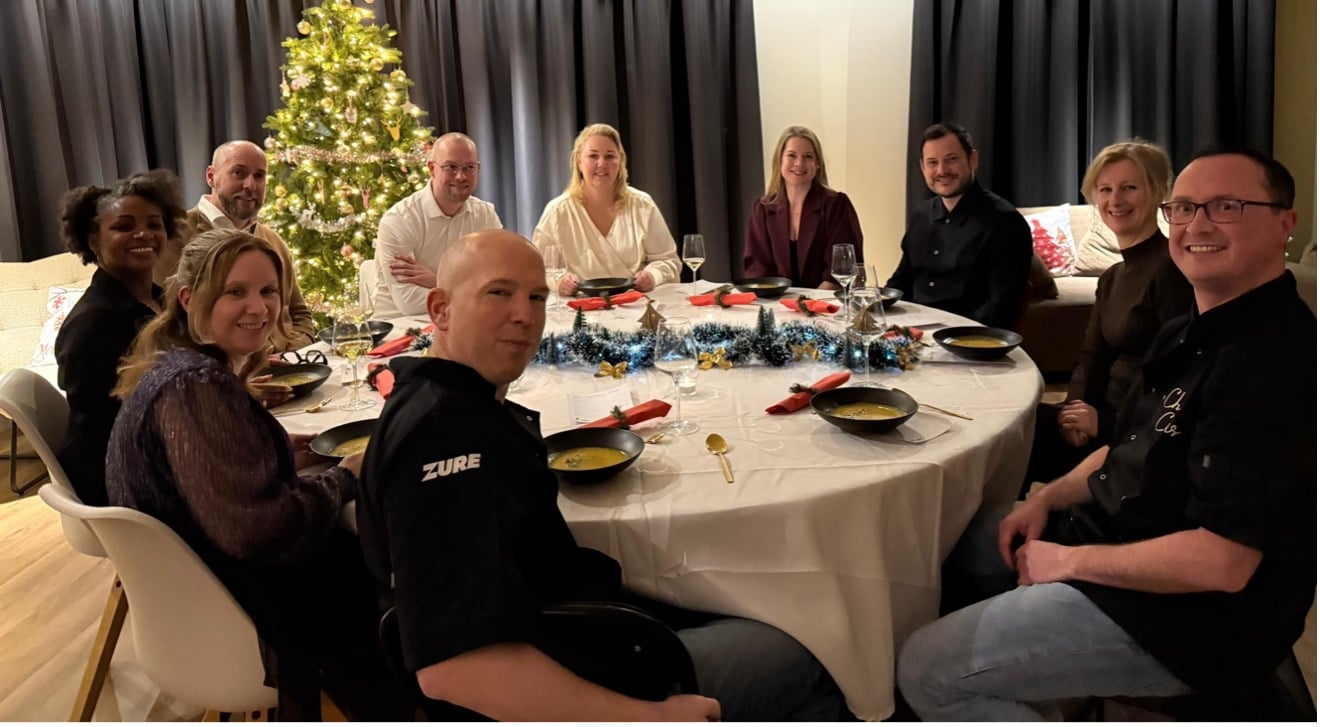
Full group of the team + partners.
During Christmas Chris and I cooked a special dinner for everyone in the team including their partners. A great way to get to know everyone a bit better outside of work.
During this first year we also had time to focus on the community. The community & sharing knowledge is key to Zure. It’s where most of the founders of the different Zure countries met each other and where the initial question of founding Zure in NL was asked. Many of us spent time delivering talks all over Europe, writing blogs etc. We value this a lot so give everyone the opportunity to spend time on this. These events all over Europe and the US also gave us a chance to meet Zureans from other countries again and have some fun on the side. From Cloudbrew in Belgium where we had 5 speakers to going to the MVP summit with 9 MVPs and sleeping together in an Airbnb in Redmond created memories I won’t forget.
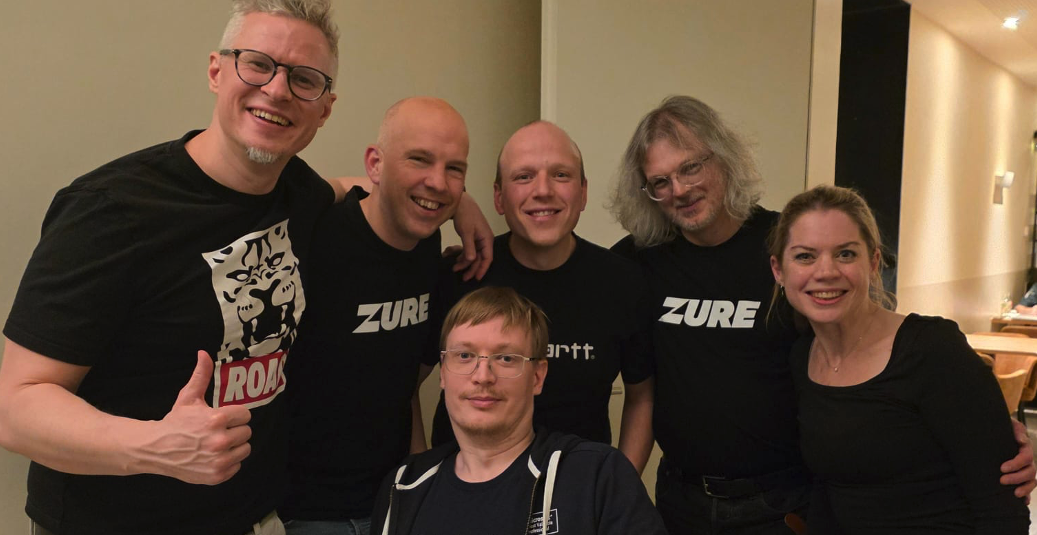
Meeting up with Zureans at Cloudbrew in Belgium.
The office: A startup lesson in furniture assembly
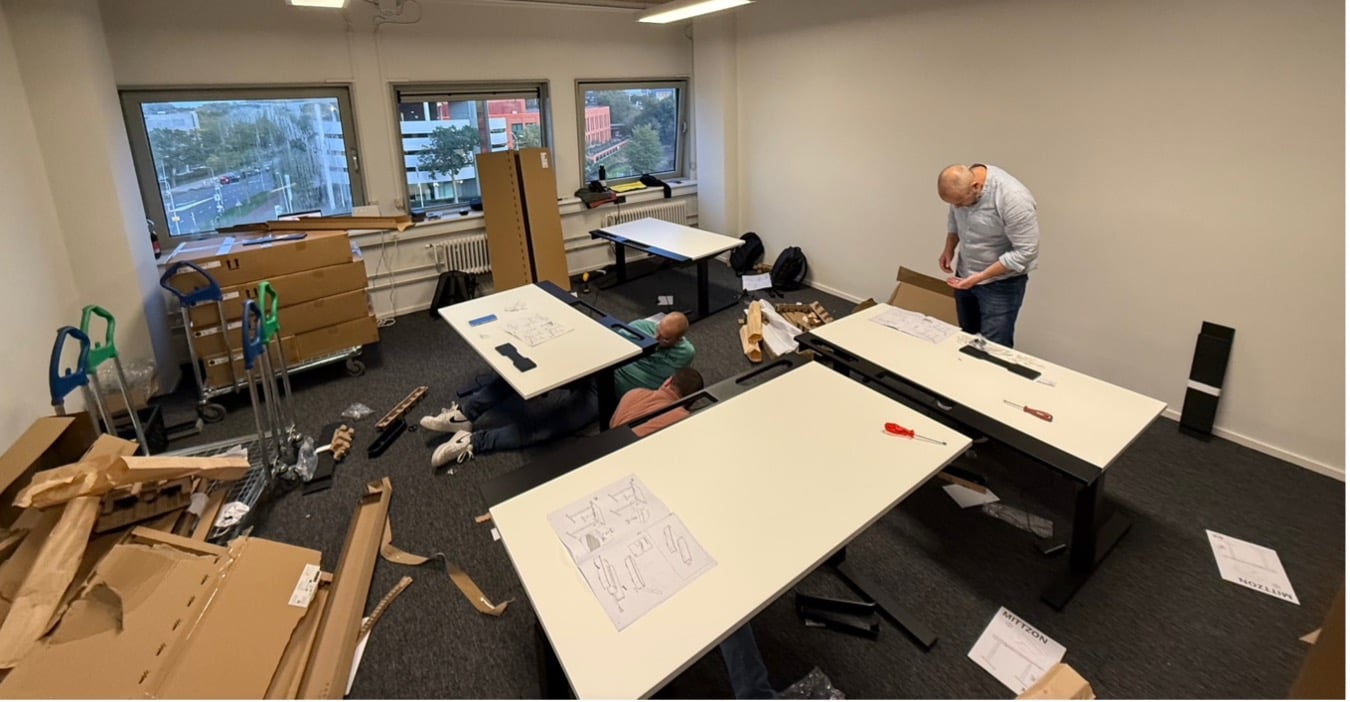
Yay we got an office. first task: get some desks.
We opened our office in Utrecht as part of the DotSlash Utrecht IT startup hub. Started small, four desks, just enough room. When we got the keys to the office I checked where to buy furniture. Found out that IKEA was the place to go to get some good electronic standing desks and IKEA was only 500 meters away from the office. We went on a trip to walk to IKEA and walked back with a few carts with desks, chairs and other furniture. A bit later we crammed six desks into that space before Barbara and Marnix started, looked around, and thought: this is not going to last. Luckily we heard that a space three times the size was opening up in the same building the very next month. We moved. Fast.
As a startup we don’t have people with specific roles or much help with any kind of things. A lot of it we do ourselves that you might take for granted working in a large organisation. We had to think about buying the coffee, water the plants in the office, doing the bookkeeping and we assembled the furniture ourselves. Nobody is too senior for the practical stuff of running a small company. And I actually quite enjoyed doing these things together.
Agentic coding
If I had to pick the one thing from this year that changed how I think about software development, it's agentic coding.
We were early on this wave, deliberately. And riding it has given us an energy in the office that's hard to describe. Every morning someone comes in with something new they've tried, something they've read, a workflow that just saved them hours. We share it, debate it, experiment. I get a lot of energy from it and we get to share it with our customers as well doing workshops in building code using AI coding agents.
While having these discussions we came up with a little framework / tool that would make our lives easier at our customers. az-infra-harness is an open source tool that guides you through designing Azure infrastructure and then generates production-ready Bicep or Terraform code using coding agents like Claude Code, GitHub Copilot, or OpenCode. Instead of staring at a blank template, you answer guided questions and the agent builds the context, documents the trade-offs, and generates the infrastructure code. It's the kind of tool we wanted to exist, so we built it, together in a number of brainstorm / mob programming sessions on a few tuesday nights where we often share knowledge and have dinners together in the office.
That's what happens when a team is excited about where things are going. Build things while having fun.
What we learned
You always need to be on the lookout for new projects & clients even if everyone is on long term assignments. You never know what will happen. A client can be out of budget all of a sudden or have a big re-org. Having a good pipeline is needed even if you’re small. Build the habit before you need it. I’m sure we will have some bench time sooner or later that is inevitable but I'm quite proud of everyone in the team helping out with spotting opportunities.
Hire people you already trust, especially in the beginning. Every person on our team came through a real relationship, community or past work. We don’t work with recruiters. We’re open for having conversations directly so contact me or anyone from the team if you are interested.
Culture isn't built by writing it down. It's built by the dinner you take someone to before they join. By helping a new colleague move furniture at 8pm. By being honest about company finances even when the news isn't great. By how you handle the first mistake.
The market doesn't know you yet. That's the real challenge. Not the first clients, those come from your network. The next ones are harder. That is what we’re working on now.
What's Next
We're not in a rush to grow fast. We want to grow right.
No recruiters. We talk to people ourselves, tell our story, and find out what they want to build. If it fits, great. If it doesn't, that's okay. We'd rather have six people who are genuinely excited about this than twenty who are just looking for the next assignment.
Platform Engineering, AI-assisted software development, and building Agentic applications. These are not trends we're chasing. They're the problems our clients actually have, and they're the work that gets us out of bed in the morning.
Year one taught us that the adventure is real. The chaos is manageable. And the team makes all the difference.
Zure Netherlands, built by people, for people.
Let's roar at challenge together. 🦁